
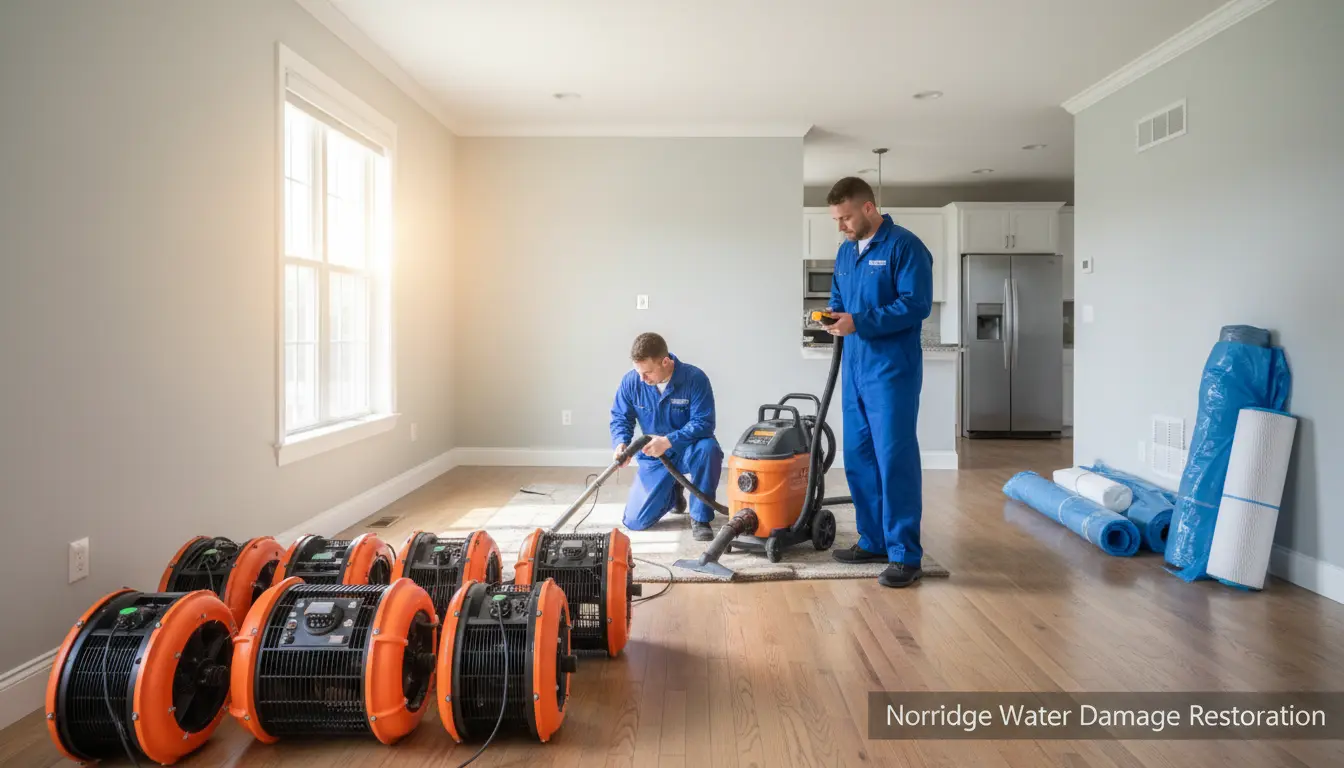
Imagine waking up to the sound of rushing water in your Norridge home, only to discover that a burst pipe or heavy rain has turned your living room into a swimming pool. Floods can strike without warning, especially in our Chicago suburb where sudden storms are common. As a resident of Norridge, you know how quickly water damage can escalate, threatening your family’s safety and your property’s value. But don’t panic—taking swift action can make all the difference. In this guide from Norridge Water Damage Restoration, we’ll walk you through the immediate steps to protect your home and health after a flood. Whether it’s a minor leak or a major inundation, we’re here to help you navigate the chaos and restore your peace of mind.
Immediate Safety Measures: Prioritize Your Well-Being
The first moments after discovering a flood are critical. Your safety and that of your loved ones come first. Here’s what to do right away:
Turn Off Utilities and Evacuate if Necessary
If you see standing water, especially near electrical outlets or appliances, shut off the main power switch immediately to avoid electrocution risks. In Norridge, where homes often have basements prone to flooding from the nearby Des Plaines River overflows, this step is non-negotiable. Next, turn off the water supply if the flood source is internal, like a broken pipe. If the water level is rising or there’s any structural concern, evacuate the property and call emergency services.
For professional assistance in handling these hazards, consider reaching out to experts who specialize in sewage cleanup to ensure contaminated water doesn’t pose health risks.
Document the Damage for Insurance
Before moving anything, grab your phone and take photos or videos of the affected areas. This documentation is crucial for your insurance claim. Note the time of the flood, the source, and any visible damage. In Norridge, local insurers like those familiar with our community’s frequent weather events will appreciate detailed records to expedite your payout.
Assessing and Containing the Damage
Once safety is secured, it’s time to assess the extent of the water intrusion. Acting fast can prevent secondary issues like mold growth, which thrives in our humid Illinois climate.
Identify the Water Source and Stop It
Determine if the flood is from clean water (like a pipe burst) or contaminated (sewage or floodwater). Clean water is easier to handle, but black water from sewers requires professional intervention. If you’re unsure, don’t hesitate to contact Norridge Water Damage Restoration—we’ll assess and contain it promptly.
In nearby areas like Des Plaines, we’ve seen how quickly sump pump failures lead to basement floods; the same risks apply here in Norridge.
Remove Standing Water Safely
Use wet-dry vacuums, buckets, or pumps to remove water, but avoid spreading it further. For larger volumes, rent equipment or call pros. Wear protective gear—rubber boots, gloves, and masks—to shield against bacteria. Remember, in Norridge’s older homes built in the mid-20th century, wood floors and drywall absorb water rapidly, leading to warping if not addressed soon.
Cleaning and Drying Your Property
With water removed, focus on drying to halt further deterioration. Moisture left unchecked can lead to structural weakening and health hazards.
Ventilate and Dehumidify
Open windows and doors for airflow, but only if it’s safe and weather permits. Use fans and dehumidifiers to circulate air and pull out moisture. For effective results, professional drying and dehumidification services are ideal, as they use industrial-grade equipment to reach hidden areas like wall cavities.
In our service area, including Niles, we’ve helped countless families dry out attics and crawl spaces after summer storms.
Clean and Disinfect Surfaces
Wipe down hard surfaces with a bleach solution (one cup bleach to one gallon water) to kill bacteria. For fabrics and carpets, professional cleaning is best to avoid residue. If documents or valuables are soaked, explore document recovery options to salvage important papers like deeds or photos, which are irreplaceable for Norridge homeowners.
Repairing and Restoring Your Home
After drying, tackle repairs to get your property back to normal. This phase requires careful planning to ensure long-term durability.
Inspect for Hidden Damage
Check walls, ceilings, and floors for signs of weakness. Peel back carpets to inspect subfloors, and tap walls for hollow sounds indicating waterlogged insulation. In Norridge, where homes near O’Hare Airport face occasional flooding from runway runoff, hidden damage in foundations is a common issue.
Structural Repairs and Mold Prevention
Replace irreparable drywall and insulation. If mold appears—often within 24-48 hours—address it immediately with mold remediation to prevent respiratory issues. For aesthetic fixes, wall and ceiling repair can restore your interiors seamlessly.
Local building codes in Norridge emphasize proper ventilation post-flood, so consulting pros ensures compliance.
Preventing Future Floods in Norridge
Learning from this experience, take proactive steps to safeguard your property against future incidents.
Install Flood Barriers and Upgrades
Consider sump pumps, backwater valves, and elevated appliances. In flood-prone Norridge neighborhoods like those along Cumberland Avenue, these upgrades have saved many homes from repeat damage.
Regular Maintenance Tips
Inspect gutters, downspouts, and seals annually. Clear drains before heavy rains, common in our area during spring thaws. For ongoing protection, schedule routine checks with local experts serving spots like Rosemont.
FAQ: Common Questions About Flood Recovery in Norridge
How soon after a flood should I call professionals?
Ideally within the first 24 hours to prevent mold and further damage. Delays can cost thousands in repairs.
Does homeowner’s insurance cover flood damage in Norridge?
Standard policies cover sudden water damage from pipes but not external floods. Check for riders or contact NFIP for river-related claims.
Can I clean up the flood myself?
For small, clean water incidents, yes—but for sewage or extensive damage, pros are essential to avoid health risks and ensure thorough drying.
How long does drying take after a flood?
It varies from 3-5 days for minor floods to weeks for severe ones. Professional equipment speeds it up significantly.
What if mold develops post-flood?
Don’t ignore it—mold remediation is crucial. Early intervention prevents it from spreading to HVAC systems.
Conclusion: Take Control and Restore Your Norridge Home Today
A flood in your Norridge property can feel overwhelming, but by following these steps—from safety checks to professional repairs—you can minimize the impact and emerge stronger. At Norridge Water Damage Restoration, we’re your local partners in recovery, with years of experience serving our community and beyond. Don’t let water damage linger; contact us today for a free assessment and rapid response. Your home deserves the best—let’s get it dry and safe again. Call now at (708) 809-8963 or visit our site to start your restoration journey.